skip to navigation | skip to content


Programs Improving the Recognition and Management of Severe Infection and Sepsis

This program is current
Improving the Recognition and Management of Severe Infection and Sepsis

Improving the Recognition and Management of Severe Infection and Sepsis Program


The joint Agency for Clinical Innovation and Clinical Excellence Commission Severe Infection and Sepsis Project is working to reduce preventable harm to patients through improved recognition and management of severe infection and sepsis in Emergency Departments and inpatient wards throughout NSW.

Key elements of the improvement initiative are:

  • Recognition of risk factors, signs and symptoms of sepsis
  • Resuscitation with rapid intravenous fluids and administration of antibiotics within the first hour of diagnosis of sepsis
  • Referral to appropriate senior clinicians and teams and retrieval if appropriate


Program Overview

Background

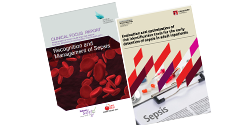
Appropriate recognition and timely management of patients with severe infection and sepsis is a significant problem in NSW hospitals and healthcare organisations around the world. Sepsis has been identified by the NSW Root Cause Analysis Review Committee as a recurrent issue; the Clinical Excellence Commission Clinical Focus Report on the Recognition and Management of Sepsis 1 found significant deficits in a range of clinical settings.

Delayed treatment of patients with severe infection and sepsis is associated with high mortality rates and high costs to the healthcare system. Effective antimicrobial administration within the first hour of documented hypotension is associated with the increased survival to hospital discharge in septic shock 2. It has been estimated that the mortality rate increases by 7.6% with every hour’s delay in commencing antibiotic therapy in the first six hours after hypotension onset.

There are a number of international protocolised, early resuscitation studies underway including the ARISE trial in Australia. There are a number of sepsis pathways, standing orders and algorithms in use in NSW health facilities however practice is variable. A survey of level 4, 5 and 6 Emergency Departments in NSW was conducted by the Clinical Excellence Commission in July 2010. The results indicated that 50% of the Emergency Departments do not have formalised processes for the identification and management of patients with severe infection and sepsis.

1 Clinical Excellence Commission. Clinical Focus Report From Review of Root Cause Analysis and/or Incident Information Management System (IIMS) Data Recognition and Management of Sepsis , 2009 2 Kumar A, Roberts D, Wood KE, et al. Duration of hypotension before initiation of effective antimicrobial therapy is the critical determinant of survival in human septic shock. Critical Care Medicine 2006; 34: 1589-1596.


Project Goals

To reduce preventable harm to patients with severe infection and sepsis through early recognition and prompt treatment.

Preliminary discussions have been undertaken with key clinicians and other experts who have identified the management of severe infection and sepsis in Emergency and general clinical areas as a high priority for Local Health Districts. It is anticipated that the project will complement the ARISE study that is underway in some hospitals and may assist in the recruitment of patients.

The severe infection and sepsis initiative offers NSW the opportunity to build on the previous work undertaken in individual Local Health Districts and enables consistent improvement in the recognition and management of severe infection and sepsis at a state level. This will be achieved by developing a consensus approach to management of patients with severe infection and sepsis. It is anticipated that the resources developed throughout the life of the project will be available to all facilities in NSW. Facilities that already have resources in place may consider that the project deliverables will provide credible and useful additional resources which can be adapted to meet local needs as required.

Key Features of the Program

Engagement of key stakeholder groups

There has been engagement of key stakeholder groups from rural, metropolitan and tertiary hospitals and health related organisations with broad nursing, medical, allied health and consumer representation.

Clinical leadership

There has been ongoing collaboration with identified nursing and medical lead clinicians in hospitals to drive improvement in the recognition and management of sepsis. Local Health District Clinical Governance Units have been integral in building capacity to support and sustain the improvement strategies.

Sepsis Toolkit

The Sepsis Toolkit supports project implementation and staff education at the hospital sites. Paediatric resources are under development. Resources include the sepsis clinical pathway, first dose empirical intravenous antibiotic guideline, implementation plan and education resources. The sepsis education resources aim to promote essential knowledge and assessment skills necessary to recognise and manage the patient with sepsis with emphasis on supporting junior clinicians.

Sepsis clinical pathway

A generic adult sepsis pathway has been developed to support recognition of severe infection and sepsis in the emergency setting and to give clear guidelines for severe infection and sepsis notification, escalation and initial management.
The sepsis pathway promotes:

  • Early flagging of severe infection and sepsis
  • Early involvement of senior clinicians in diagnosis and management of sepsis
  • Appropriate and timely fluid resuscitation
  • Prompt administration of antibiotics (within one hour)
  • Serum lactate monitoring
  • Referral of care to appropriate clinical teams including retrieval if appropriate

Sepsis adult FIRST DOSE empirical intravenous antibiotic guideline

The Sepsis adult empirical intravenous antibiotic guideline aims to guide the prescription and timely administration of the FIRST DOSE of intravenous (IV) antibiotics for adult patients who have a diagnosis of sepsis. The guideline is based on the Therapeutic Guidelines: Antibiotic version 14, 2010 Prophylactic, empirical or directed antimicrobial therapy and incorporates best available evidence and the principles of appropriate use of antibiotics. The Guideline is intended to provide an accessible resource which can be adapted to suit individual facility preferences as required.

Prompt administration of antibiotics and resuscitation fluids is vital in the management of the patient with sepsis. The goal is to commence antibiotic therapy within the first hour of diagnosis of sepsis.

Project measures and evaluation

The key project measures are the time taken to administer the first dose of intravenous antibiotics and the time taken to commence the second litre of intravenous fluid. There has been ongoing consultation with key stakeholders and clinicians in developing the CEC web-based Sepsis Data Collection and Reporting system which enables real-time Hospital, Local Health District and NSW state-wide sepsis data review.

Clinical outcome and economic evaluation utilising data linkage between clinical records and the CEC Sepsis Data Collection and Reporting System is underway.

Implementation

Phase 1: Emergency Departments

A Pilot Study was undertaken in five Emergency Departments in 2010. Preliminary results in the small sample were very encouraging with median time to administration of antibiotics reduced by 50% and greatly enhanced clinician awareness of sepsis and the need for prompt recognition and treatment.

Emergency Department implementation commenced in May 2011 and is being undertaken in collaboration with the Emergency Care Institute. An orientation workshop was held at the Mercure Hotel Sydney Airport with attendance by 150 senior Emergency doctors, nurses, ambulance, Local Health District Clinical Governance Directors and other key project stakeholders. The Workshop presentations are available under Resources.

The ACI/CEC Sepsis Project team provide support to the fifty participating Level 3-6 Emergency Departments via telephone, monthly teleconferences and site visits.

Phase 2: Hospital inpatient wards

Phase 2 will commence in 2012 and will focus on improvement initiatives in the hospital inpatient areas. Preliminary NSW data suggests that 30% of deteriorating patients who require a Rapid Response call are septic. Phase 2 strategies will link closely with the Clinical Excellence Commission Between the Flags program.

Rural and remote facility implementation

Specific strategies for smaller rural and remote facilities that do not have on-site medical staff are being developed for Phases 1 and 2.

Resources

Project Summary

  • Severe Infection and Sepsis Project Summary - PDF ~120kb

Sepsis Toolkit

Paediatric sepsis pathway and empirical intravenous antibiotic guideline Under development and will be added to the Sepsis Toolkit when available

Emergency Department Site Resources

  • Gosford Hospital ED Sepsis Resource Board - PDF ~152kb

  • RPAH ED Sepsis Resus Bay Poster - PDF ~123kb

  • RPAH ED Sepsis Triage Poster - PDF ~98kb

  • RNSH Sepsis Recognition Tool Triage Final - PDF ~204kb

  • RNSH Sepsis Resuscitation Guide - PDF ~185kb

  • Nepean ED Sepsis Poster - PDF ~109kb

  • RPAH Sepsis Emergency Department Management Form - PDF ~76kb

Sepsis Teleconference schedule of meetings - 2012

Twitter @sepsis_kills

Follow the CEC Sepsis Project @sepsis_kills to read and share information on initiatives to improve the recognition and management of sepsis.
Use #sepsis in your tweet to keep track of the ongoing conversation about sepsis.


Contact

Please direct queries and correspondence to:

Sepsis Project Manager
Mary Fullick
Clinical Excellence Commission
Locked Bag A4062
Sydney South NSW 1235

Telephone: 02 9269 5542

Email the Sepsis Project Manager

Useful links